
Spotlit Field Notes: Issue 5
The literary festival newsletter
Spotlit Field Notes is the literary festival newsletter from Ilona, Mathew and Rina, the team behind Spotlit, a platform connecting festivals with brilliant new books and authors.
Latest Non-Fiction on Spotlit
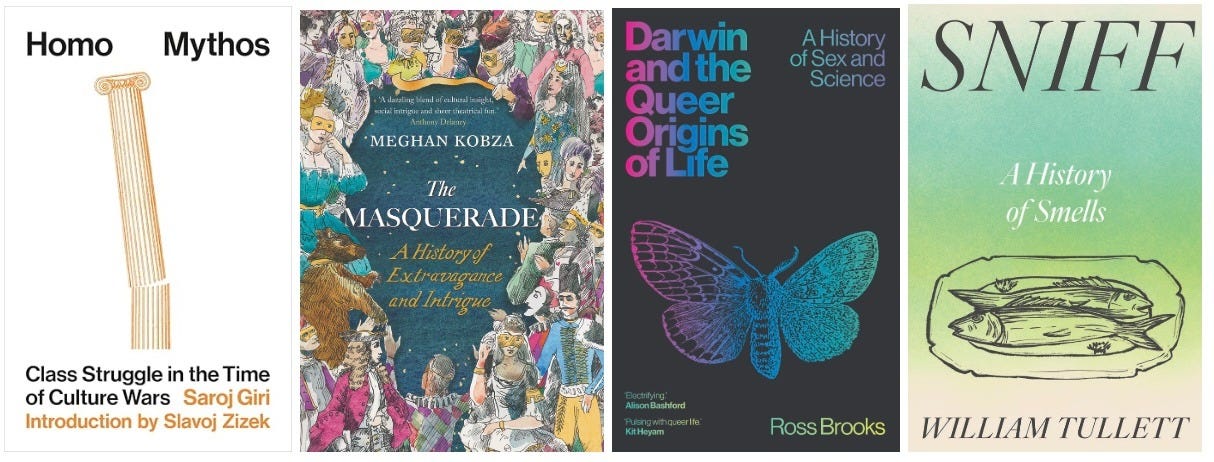
Some of the books that caught our collective eye:
The Masquerade: A History of Extravagance and Intrigue by Meg Kobza, published by Yale University Press on 11 May 2026 Contact: chloe.foster@yaleup.co.uk Non-Fiction: History. Author based in Newcastle.
The first full history of an extraordinary eighteenth-century British entertainment. Glittering masquerades, held at the most fashionable London venues, dominated the calendars of the Georgian elite. Meghan Kobza invites us into these dazzling gatherings, and shows how they became a wider cultural obsession. Lavishly illustrated, full of life and originality, this is a revelatory account of an event which captivates us to this day. Kobza is a historian and the author of The Domino and the Eighteenth-Century London Masquerade.
Darwin and the Queer Origins of Life by Ross Brooks. Published by Yale University Press on 10 August 2026. Publisher Contact: chloe.foster@yaleup.co.uk Non-Fiction: History, Science & Nature, LGBTQ+ Author based in Brighton.
What did Darwin and Linnaeus really think about sex? In this iconoclastic history, Ross Brooks shows how queerness was at the heart of evolutionists’ thinking about the natural world. From hermaphroditic slugs and sex-changing birds to male pigeon lactation, pregnant male seahorses, and bisexual pigs, Darwin and his fellow naturalists were privately in awe of nature’s sexual diversity. Brooks (he/him) is an independent historian of science and a foundational thinker in queer history and the history of sexology.
Sniff: A History of Smells by Will Tullett. Published by Yale University Press on 7 September 2026. Contact: chloe.foster@yaleup.co.uk Non-Fiction: History Author based in Hertfordshire and York and happy to travel elsewhere.
Across vast periods of time and around the globe, smell has been central to human life. But what did the past smell like? Why does our own world smell the way it does? Moving through key locations, from libraries to forests, churches to hospitals, Will Tullett explores the peculiar history of smell in a history of smells, but biographies of the many noses that have sniffed them. Tullett is a senior lecturer in early modern history at the University of York and the author of Smell in Eighteenth-Century England: A Social Sense and Smell and the Past: Noses, Archives, Narratives.
Homo Mythos: Class Struggle in the Time of Culture Wars by Saroj Giri Introduction by Slavoj Žižek, published by Pluto Press on 10 December 2026 Contact: jamesk@plutobooks.com Non-Fiction: Politics & Current Affairs
“The most powerful political work I’ve read for decades, maybe in my whole life” Slavoj Žižek
Deciphering the figure of HomoMythos today means recognising surplus populations as powerful agents acting in open territory, free from the determinations of capitalism, liberalism, democracy, and right-wing populism. They spawn a notion of the mythic which foregrounds social contradictions and engenders visions of a communist future. Giri is an Associate Professor in Politics at the University of Delhi.

The Spotlit Interview
“Axel Scheffler wins the award for longest-ever signing queue. After two and a half hours we had to stop the queue (which went out of the venue, around the building and up the street) and turned people away.”
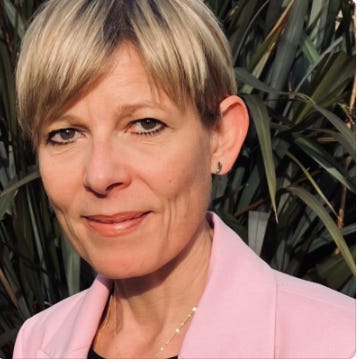
Pippa Le Quesne is the Director of the wonderful Jersey Festival of Words, Mathew’s given a talk at the festival and can attest to what a joyful event it is. The 2026 edition takes place 18-27 September.
How did the festival start? How long have you been involved?
When Ed Jewell came from Guernsey to Jersey to become the Island’s Chief Librarian, he asked a journalist and the ex-Editor of the Jersey Evening Post, why there wasn’t a literary festival here. This started a conversation, which became a steering group and then a committee. Then in 2015 I was introduced to his group of people, all of whom were passionate about starting a festival and had lots of plans but were looking for a connection with publishers/authors. My background is in publishing and so I was able to help with this, and so Jersey Festival of Words was born with the inaugural Festival taking place in 2015.
How would you describe the festival in two sentences? Or as a strap-line on a book tote?
“Jersey Festival of Words - a celebration of words in every form.”
When you’re considering a potential event, what are your criteria / what makes you say yes?
The quality of speaker i.e. if they come recommended; the subject matter and where it would sit in our programme/who it would engage; listening to a) my gut instinct and b) whether the person pitching has genuine passion for the proposed event/book/speaker.
How far ahead are you typically programming, and when is the most useful time to start a conversation?
The process starts ten months prior to the next festival (annually at the end of the September). The window for pitching is between November and early February.
What has become easier - or harder about running a literary festival over the past few years?
As our reputation has grown over the years, filling the programme has become very easy. As a result the programme has also grown (we’re currently 90+ events over ten days) and there are many more venues and partnerships to manage, making it a much more complex operation than when it started 11 years ago.
What is your audience now and how has it changed in recent years?
Typically 40+, a good mixture of males and females. We’ve been working hard to attract a younger audience by putting on as many workshops as possible. These seem to attract a younger demographic i.e. those aged 20-35, looking to do something with a friend rather than just go for a drink or a meal.
What events surprised you the most, by either underperforming or exceeding expectations?
Our most popular events ever which have sold out the fastest have been Richard Dawkins and Axel Scheffler. Axel Scheffler wins the award for longest-ever signing queue. After two and a half hours we had to stop the queue (which went out of the venue, around the building and up the street) and turned people away. Neither of these surprised me but out of all of the big name authors we’ve had I wouldn’t necessarily have thought they would have been the fastest sellers (especially Richard Dawkins - but I was heartened by the enquiring mind of Jersey!).
TV cooks have not sold as well as I would have expected.
What is your favourite festival to go to?
Hay Festival - the village set-up means you can go in and completely immerse yourself/lose yourself in another world. Saying that, I wish I had more time to visit and experience more festivals.
What book have you recommended the most times?
This tends to change from year to year. In the past year, I think I’ve recommended The Offing by Benjamin Myers the most.
What did you learn the hard way?
That growing the festival very quickly because of enthusiasm and appetite, meant having to catch-up in a hurry with the infrastructure of the organisation. As we have such a strong and committed board and organising committee we have always succeeded in making things work, but my advice to a new festival would be to take your time and make sure that all the less exciting stuff is in place from early on. The passion behind a festival is key, but solid foundations are vital to longevity.
The Jersey Festival of Words is currently seeking a Deputy Festival Director. Apply on the website.
Out and About
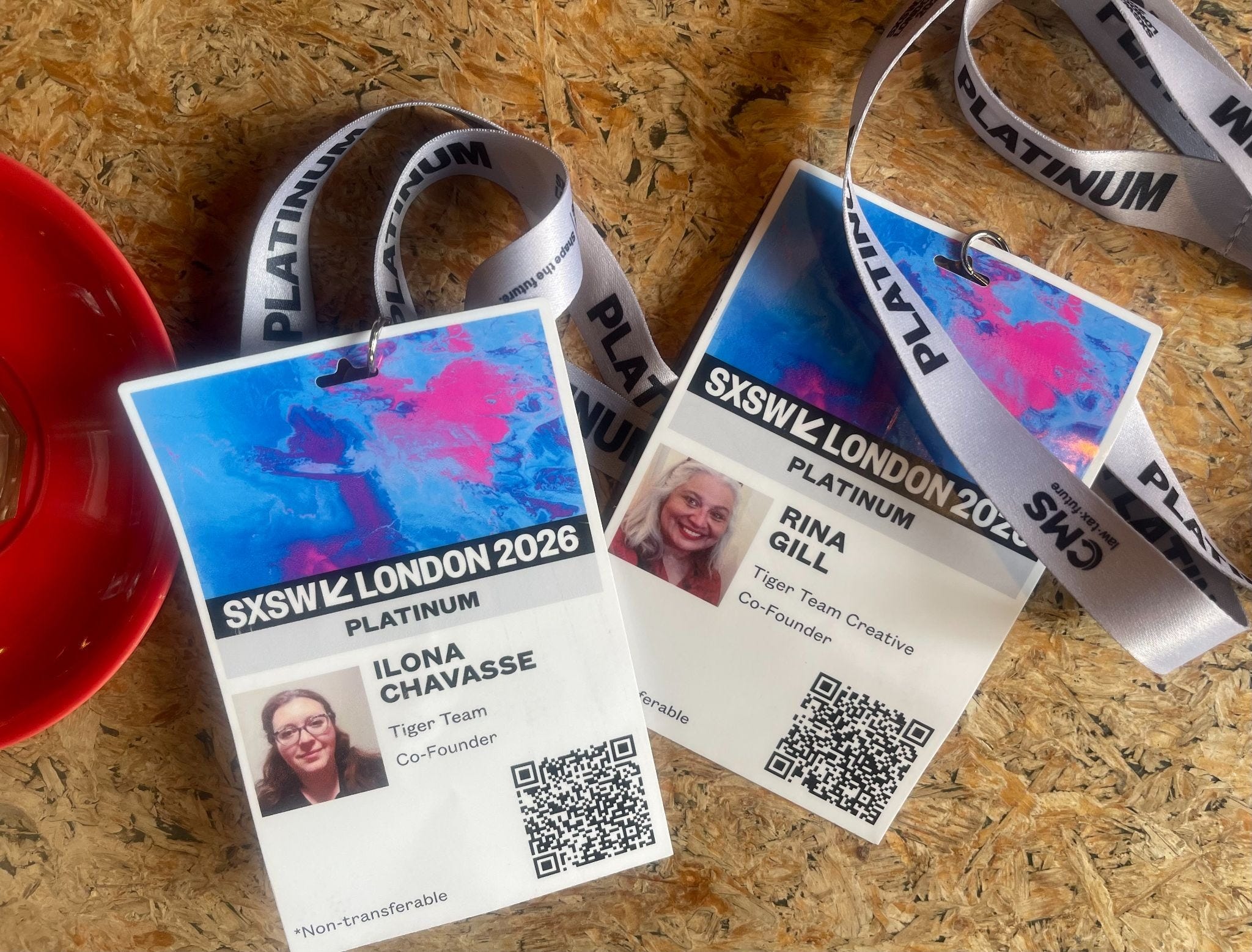
Rina and Ilona went to SXSW London - sprawling, forward-thinking, genuinely impressive - and probably spent too long looking for books. That’s not a rhetorical statement. Best-selling author Michelle Obama was there, but as a podcaster. Was it that books don’t scale like tech, music, or film? That SXSW isn’t, at root, a festival, it’s a tech and business conference with festival-ish tendencies? Or was it simply that we’ve a Pavlovian response to people queuing in the rain, and expect a book at the end of the queue?
On the other hand, how often do you see publishing people with Platinum Passes for anything?
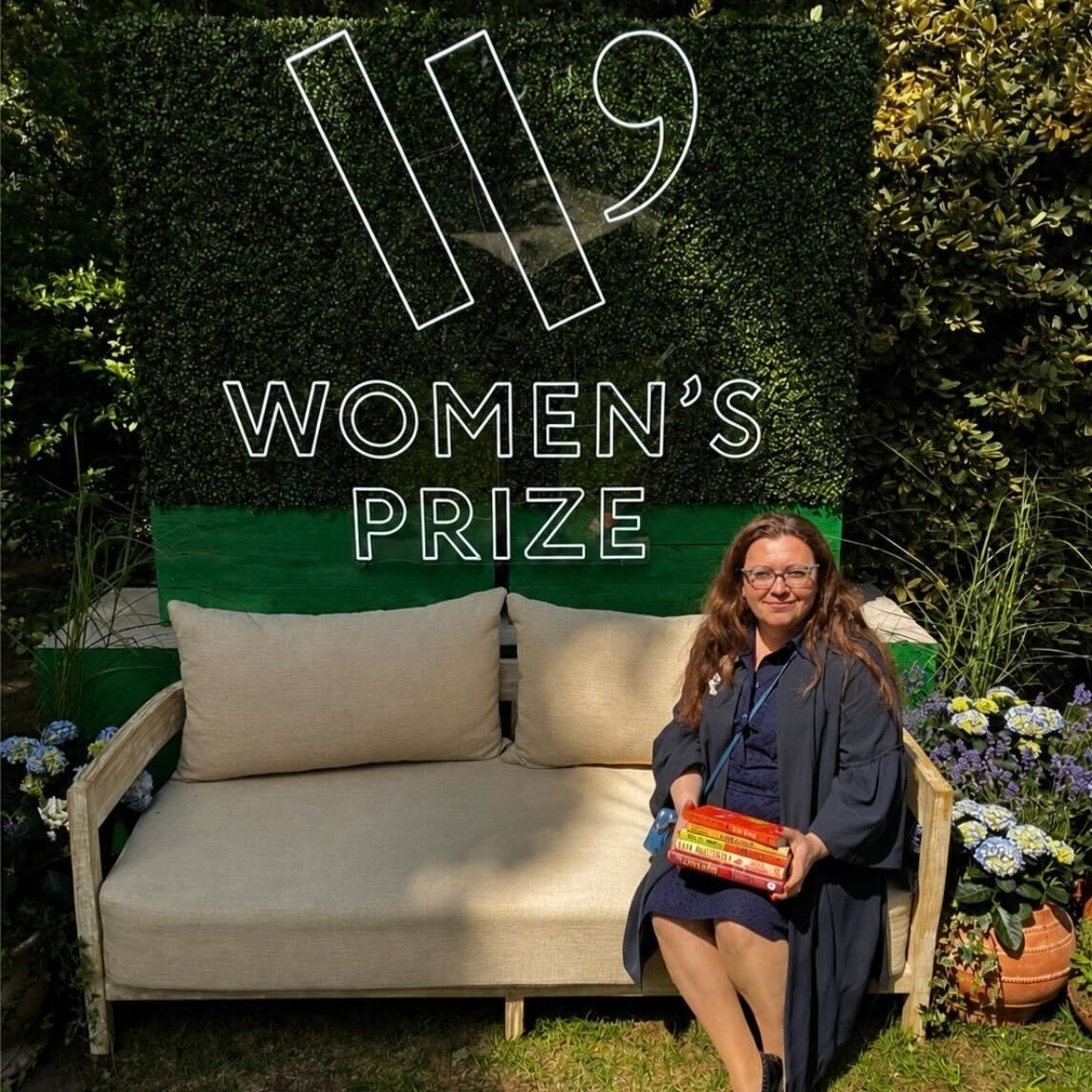
Rain was the order of the day at the Women’s Prize for Fiction Live! - which was definitely a mini-festival, with all the right attributes: outdoors, under umbrellas and in tents - where panel events went on in two large tents and book sales in a third, and pre-booked writerly-and-readerly activities at a very long trestle table in a fourth. Visitors received an inevitable tote bag, nicely full of books, not the shortlisted ones, alas. Ilona caught up with her former boss, Juliet Mabey, the founder-publisher at fiercely independent Oneworld, who recently celebrated their 40th anniversary.
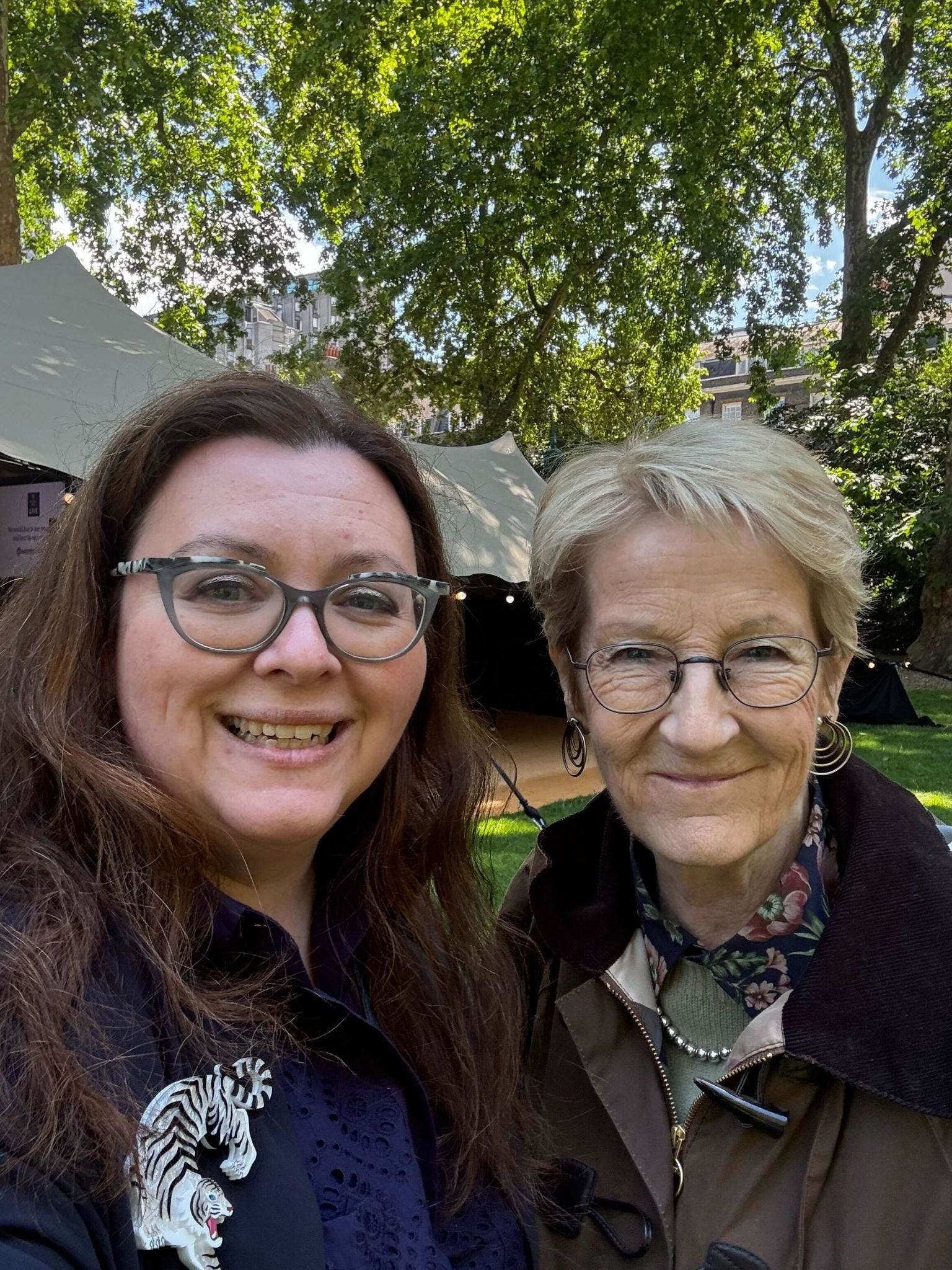
There was an impressive stable of authors signing an array of books, a darling “Virago” coffee caravan (flat whites with a sprinkling of feminism and rage), and a “Rivals” photo-op consisting of a pristine, made-up bed without Aidan Turner in it - big missed opportunity. And a set of exquisite portakabin loos - not words said lightly in a festivals context - which didn’t quite take the sting out of a £90 ticket price tag.


We also went to the warm launch of Neil Griffith’s memoir The Wrong Son, from Spotlit publisher Weatherglass Books, at the historic Betsey Trotwood in London.
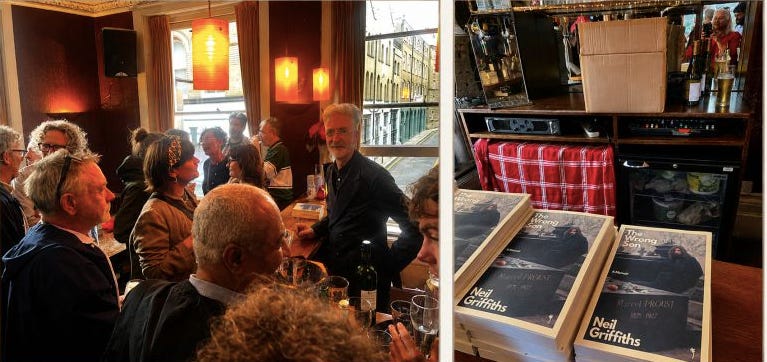
If you’ve been out and about at festivals, or planning to go and would like to touch antennae, let us know and send us your photo: ilona@tigerteamcreative.com
News in Brief
Maz Evans appointed as Budleigh Salterton Literary Festival Children’s Champion.
Cheltenham Festival has launched “The Next Chapter,” a target to make 50% of its events and activities held across the four festivals free by 2030.
Butlins are now hosting 80 specialist music “Weekends” - surely not long before a book festival joins this list.
Congratulations to friend of Spotlit, Alice Jolly, who has just won the Walter Scott Prize for Historical Fiction at the Borders Festival for The Matchbox Girl (Bloomsbury).

Publishers and publicists please add your books to Spotlit! Festival programmers, sign up and browse. It is free and takes just a few minutes.
If you would like your event featured in the newsletter or would like to be interviewed about your festival drop us a line at: mathewclayton@gmail.com. This newsletter goes to over 700 people working in the sector.
Thank you for reading!
Ilona Chavasse, Mathew Clayton and Rina Gill xxx
Ilona and Rina can also be found at Tiger Team Creative.
Authors, try out Further Reading, a simple promotional tool built by Mathew.
Ilona is newly on Substack and at The Talking Cure for Writers.